
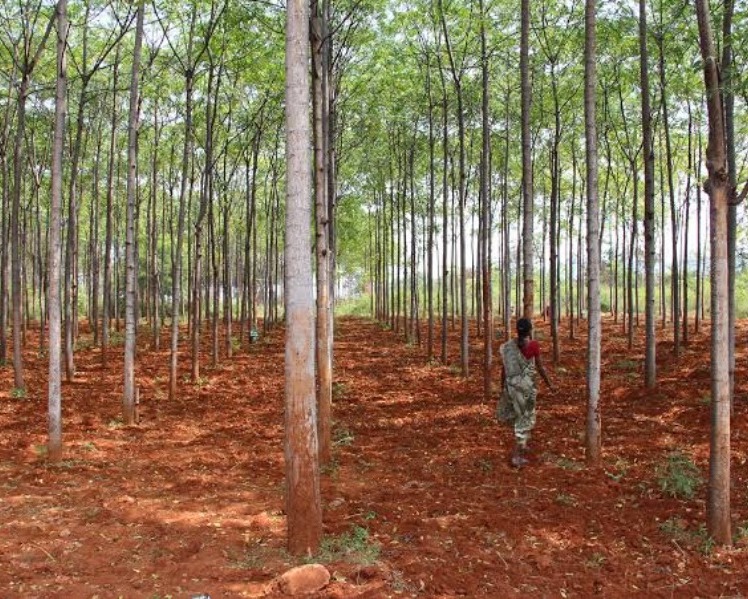
Agro Forestry Plantation Consultant Maharashtra for Building a Practical Multi-Purpose Farm Agroforestry combines agricultural land use with deliberately planned tree components. The idea can appear straightforward, but commercial implementation requires careful decisions about species, spacing, water, timelines and compatibility with other farm activities. An Agro Forestry Plantation Consultant Maharashtra can help landowners evaluate how tree-based systems fit their land and long-term objectives before plantation establishment begins. Begin With the Purpose of the Plantation Agroforestry projects can be developed for different reasons. Some landowners are interested in timber or biomass production. Others want boundary plantations, wind protection, diversified land use or integration with agricultural crops. The plantation objective influences species selection and layout. Without a clear purpose, farmers may select trees that later compete with crops, interfere with machinery or create harvesting difficulties. Species Selection Needs Local Relevance A species should not be selected simply because its projected commercial value looks attractive. Its suitability depends on soil, climate, water availability, growth behaviour and management requirements. The intended market and harvesting horizon should also be considered. For Maharashtra projects, local environmental conditions can vary significantly. A species suited to one agricultural zone may not be equally suitable elsewhere. Spacing Determines Future Flexibility Tree spacing affects light, root competition, machinery movement and the possibility of growing intercrops. Very close spacing may increase initial plant numbers but can restrict future operations. Wider arrangements may provide more room for agricultural activity but alter tree population. The correct choice depends on whether the project is primarily tree-focused or designed as a combined farming system. Water Planning Should Reflect Establishment Needs Young plantations generally require careful establishment management. If irrigation is planned, the design should correspond with planting rows, farm dimensions and water availability. Drip irrigation may be appropriate for some projects because it allows controlled water placement. Water requirements can change as trees establish, so the system should be planned with future operation in mind. Consider the Timeline Before Investing Tree plantations often involve longer investment horizons than seasonal agriculture. Farm owners should understand that establishment costs occur early while commercial returns, where applicable, may depend on a much longer cycle. That makes cash-flow planning important. Maintenance, labour, irrigation, replacement planting, pruning and protection expenses should be considered rather than calculating investment only from the cost of seedlings. Avoid Unrealistic Return Assumptions Projected timber or plantation values can be influenced by future market conditions, tree survival, growth rates, quality, harvesting costs and applicable regulations. No plantation plan should rely solely on an attractive future price estimate. A stronger evaluation uses conservative assumptions and considers multiple scenarios. Integrate the Plantation With Farm Operations Himalaya Agro Consultancy Services works with agricultural and plantation projects in Nagpur and Maharashtra, including land-use planning, irrigation and tree-based development. For an agroforestry project, professional planning can help align planting geometry with existing crops, farm roads, water infrastructure and operational requirements. A practical plan should answer several questions before planting starts: What is the purpose of the trees? How will they interact with other crops? How will the plantation be irrigated and maintained? What access will be needed at maturity? What is the expected management horizon? Agroforestry can provide a structured way to diversify agricultural land use, but its value depends heavily on design and long-term management. Treating the tree component as permanent infrastructure rather than an isolated crop helps landowners make more informed decisions about species, spacing and investment.


This is your website preview.
Currently it only shows your basic business info. Start adding relevant business details such as description, images and products or services to gain your customers attention by using Boost 360 android app / iOS App / web portal.
Agro Forestry Plantation 🌱🌴Consultant Maharashtra for Building a Practical Multi-Purpose Farm
2026-10-06T09:17:00
Agro Forestry Plantation Consultant Maharashtra for Building a Practical Multi-Purpose Farm Agroforestry combines agricultural land use with deliberately planned tree components. The idea can appear straightforward, but commercial implementation requires careful decisions about species, spacing, water, timelines and compatibility with other farm activities. An Agro Forestry Plantation Consultant Maharashtra can help landowners evaluate how tree-based systems fit their land and long-term objectives before plantation establishment begins. Begin With the Purpose of the Plantation Agroforestry projects can be developed for different reasons. Some landowners are interested in timber or biomass production. Others want boundary plantations, wind protection, diversified land use or integration with agricultural crops. The plantation objective influences species selection and layout. Without a clear purpose, farmers may select trees that later compete with crops, interfere with machinery or create harvesting difficulties. Species Selection Needs Local Relevance A species should not be selected simply because its projected commercial value looks attractive. Its suitability depends on soil, climate, water availability, growth behaviour and management requirements. The intended market and harvesting horizon should also be considered. For Maharashtra projects, local environmental conditions can vary significantly. A species suited to one agricultural zone may not be equally suitable elsewhere. Spacing Determines Future Flexibility Tree spacing affects light, root competition, machinery movement and the possibility of growing intercrops. Very close spacing may increase initial plant numbers but can restrict future operations. Wider arrangements may provide more room for agricultural activity but alter tree population. The correct choice depends on whether the project is primarily tree-focused or designed as a combined farming system. Water Planning Should Reflect Establishment Needs Young plantations generally require careful establishment management. If irrigation is planned, the design should correspond with planting rows, farm dimensions and water availability. Drip irrigation may be appropriate for some projects because it allows controlled water placement. Water requirements can change as trees establish, so the system should be planned with future operation in mind. Consider the Timeline Before Investing Tree plantations often involve longer investment horizons than seasonal agriculture. Farm owners should understand that establishment costs occur early while commercial returns, where applicable, may depend on a much longer cycle. That makes cash-flow planning important. Maintenance, labour, irrigation, replacement planting, pruning and protection expenses should be considered rather than calculating investment only from the cost of seedlings. Avoid Unrealistic Return Assumptions Projected timber or plantation values can be influenced by future market conditions, tree survival, growth rates, quality, harvesting costs and applicable regulations. No plantation plan should rely solely on an attractive future price estimate. A stronger evaluation uses conservative assumptions and considers multiple scenarios. Integrate the Plantation With Farm Operations Himalaya Agro Consultancy Services works with agricultural and plantation projects in Nagpur and Maharashtra, including land-use planning, irrigation and tree-based development. For an agroforestry project, professional planning can help align planting geometry with existing crops, farm roads, water infrastructure and operational requirements. A practical plan should answer several questions before planting starts: What is the purpose of the trees? How will they interact with other crops? How will the plantation be irrigated and maintained? What access will be needed at maturity? What is the expected management horizon? Agroforestry can provide a structured way to diversify agricultural land use, but its value depends heavily on design and long-term management. Treating the tree component as permanent infrastructure rather than an isolated crop helps landowners make more informed decisions about species, spacing and investment.
2026-10-06T09:17:00


Submit Your Enquiry